

Cold Emails to VCs Have a 95% Non-Reply Rate. Here is What Actually Gets You a Meeting.
The data on warm introductions is damning. Here is how to be on the right side of it.

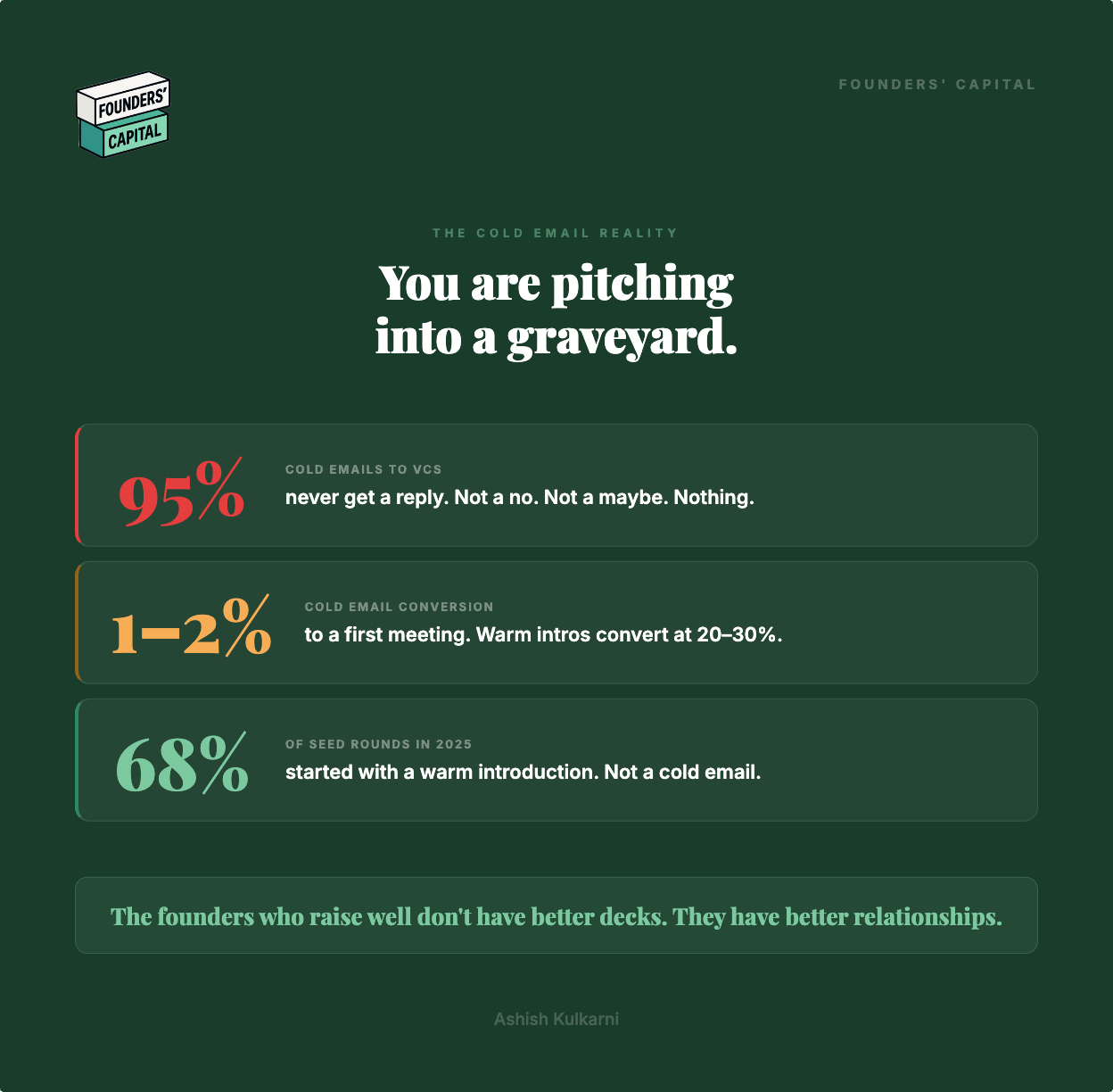
68% of seed rounds in 2025 started with a warm introduction.
Let that sit for a second.
You have been crafting subject lines, personalising your opening paragraph, attaching your deck, and hitting send. You have done this fifty times. Maybe a hundred. You have a spreadsheet tracking who you emailed and when.
And the reply rate on a well-crafted cold email to a VC is 1 to 2%.
Not 1 to 2% conversion to a cheque. 1 to 2% conversion to a reply.
95% of cold emails to investors never get a response. Not a no. Not a “not right now.” Nothing. They disappear into an inbox that receives hundreds of pitches every single week from founders who are doing exactly what you are doing.
You have been pitching into a graveyard.
What Actually Happens to Your Cold Email
I have spoken to over 100 VCs in the last few years. Here is what they told me about their inbox.
A partner at an early stage fund gets anywhere from 50 to 200 cold pitches a week. They read the subject line. If it clears that bar, they read the first two sentences. If those two sentences do not immediately tell them why this is relevant to what they are investing in right now, they move on.
Most cold emails do not clear the subject line.
The ones that do rarely survive the first two sentences.
And even the ones that make it through to a reply, the data shows those deals take on average six months to close. A deal that came through a warm introduction closes in three.
You are not just getting fewer meetings. You are also losing six months of your runway chasing them.
Why Warm Introductions Work the Way They Do
A VC getting a cold email from you has no context. They do not know if you can execute. They do not know if you are coachable. They do not know if you will use their money well. Everything they need to know to say yes is missing.
A VC getting an introduction from one of their portfolio founders is a completely different conversation.
That portfolio founder has already passed a filter. The VC backed them, which means they trust their judgment. When that founder says “I met this person and I think you should talk to them,” the VC is not evaluating a stranger. They are evaluating someone their trusted operator has already vouched for.
That is why warm introductions convert to first meetings at 20 to 30%. That is ten to twenty times the rate of a cold email.
Same founder. Same deck. Completely different outcome. The only thing that changed is who made the introduction.

The Referral Nobody Talks About
Most founders, when they think about getting a warm intro, think about finding someone who personally knows the VC. A mutual connection on LinkedIn. A friend of a friend.
That is the hard path.
The easier path is sitting right there in every VC’s portfolio.
Portfolio founders are the single best source of warm introductions to a VC and almost nobody treats them that way. Here is why they work so well.
They have a direct relationship with the partner. They speak to them regularly. When they refer someone, that referral carries weight because the VC trusts them with their money.
They have also been through the same fundraising process you are going through. They understand what the VC is looking for. They can position you correctly. They are not just opening a door, they are opening it in the right way.
And unlike a VC’s associate or a LinkedIn mutual, a portfolio founder has a real incentive to help you if they genuinely like what you are building. They know what it was like to be where you are.
How to Actually Build That Relationship
This is where most founders get it wrong. They find a portfolio founder, send them a cold LinkedIn message asking for an intro, and wonder why it does not work.
You cannot ask for the referral first. You have to earn it.
Here is the sequence that actually works.
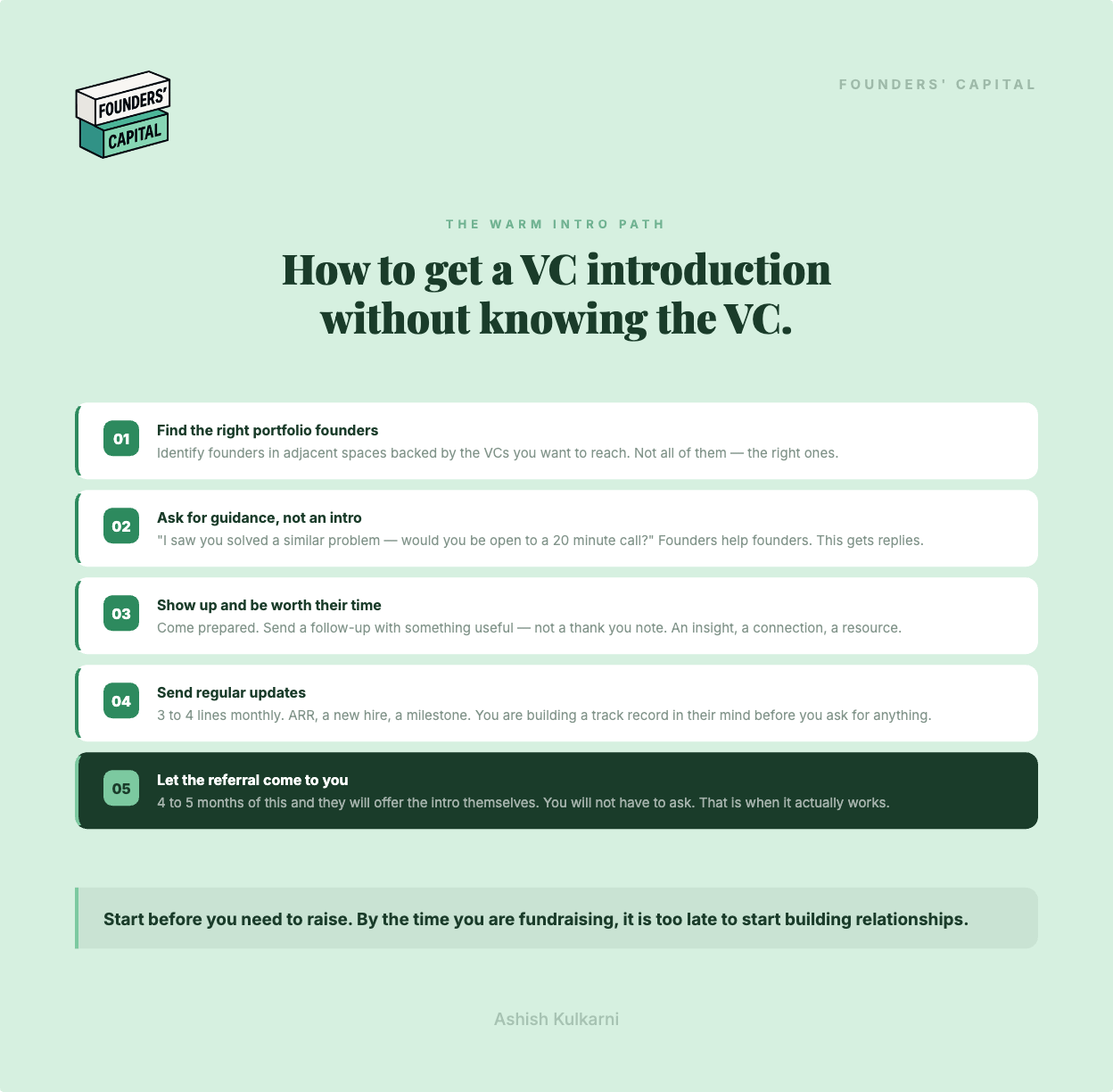
Step 1: Find the right portfolio founders. Not all of them. The ones building in adjacent spaces, at a similar stage to where you want to be in two years. The ones who would genuinely benefit from knowing about your progress.
Step 2: Start with a genuine ask for guidance, not an intro. “I am building X, I saw you solved a similar problem at your company, would you be open to a 20 minute call?” Founders help other founders. This gets a response far more often than a pitch.
Step 3: Show up and be worth their time. Come prepared. Ask sharp questions. Send a follow-up note with something useful in it. Not a thank you. Something actually useful, an article, a connection, an insight.
Better yet, offer to pay them for their time. Ask for a paid mentorship session for 30 minutes. Most will say no to the money and help you anyway. But the offer itself signals that you respect their time and you are serious. That changes how they see you. Nobody remembers the hundredth founder who asked for free advice. They remember the one who offered to pay.
Step 4: Send regular updates. Not spam. A short monthly note, three to four lines, on what has changed in your business. ARR, a new hire, a product milestone. You are building a track record in their mind.
Step 5: Let the referral come naturally. Four or five months of this and a portfolio founder who genuinely believes in what you are building will offer the introduction themselves. You will not have to ask. In fact if you have done this right, they will want to make the introduction because it reflects well on them too.
This takes longer than sending fifty cold emails. It also actually works.
The Problem With Doing This Manually
To run this strategy well you need to know which portfolio founders to target. That means knowing which VCs invest in your sector, which stage they write cheques at, and who is already in their portfolio.
Most founders spend hours trying to piece this together from Crunchbase, LinkedIn, and VC websites. They end up with incomplete information, stale data, and no clear picture of who to go after first.

VCLab in The Founders’ Stack gives you a curated database of 50+ VC firms with their actual investment criteria: sectors they back, stages they write cheques at, typical ticket sizes, geographic focus, and recent portfolio activity.
Filter by your sector, stage, and geography. The result is a shortlist of the VCs who match your profile and the portfolio founders who are your best path to reaching them.
You stop guessing. You stop spraying. You start with the right ten people instead of the wrong hundred.
The Number That Should Concern You Most
It is not the 95% non-reply rate on cold emails, though that should sting.
It is this one: deals sourced through cold outreach take six months on average to close. Deals sourced through warm introductions close in three.
That is three months of runway. At an early stage company, three months is the difference between closing the round with leverage and closing it under pressure. Or not closing it at all.
The founders who raise well do not have better decks. They do not have a better product. They have better relationships. And they started building those relationships before they needed them.
Start Now, Not When You Are Raising
The single biggest mistake I see founders make is treating investor relationships as something to build when the round starts. By then it is too late. You are under time pressure, you look desperate, and every conversation has an agenda the other person can feel.
These relationships do not get built in a month or two. Realistically you are looking at five months to a year of consistent, genuine engagement before you have earned the kind of trust that leads to a warm introduction. That is not a reason to delay. That is a reason to start today.
And here is the part most founders miss. A portfolio founder who has been around for a few years has typically raised from three or four different VCs across their journey. One good relationship with one portfolio founder is potentially four warm introductions. Not just for this round. For every round after it. And as your startup grows, that same person becomes more than a referral source. They become a sounding board, a reference, someone who has seen the road ahead of you and is willing to help you navigate it.
If you are planning to raise six months from now, now is the right time to start. Not next month when you feel more ready. Not when your metrics look better. Now. The founders who close rounds well did not start preparing when the round opened. They started before anyone knew they were raising.
The founders you need to know are already in someone's portfolio.
Best,
Ashish